

If you're a brand making recycled content claims, you've probably been asked: can you prove it? Spreadsheets or the supplier's word no longer cuts it, especially in the landscape of ESPR and EMPCO. Verifiable, audit-proof data that holds up is the way forward.
If you're running a collection operation across locations in the Global South, you've probably asked the opposite question: how do we get our data to the standard that European off-takers require?
The answer to both questions is the same system. Here's exactly how Eddy's track-and-trace pipeline works — from the first bag collected at a community drop-off point to the verified credit that lands in your impact report.
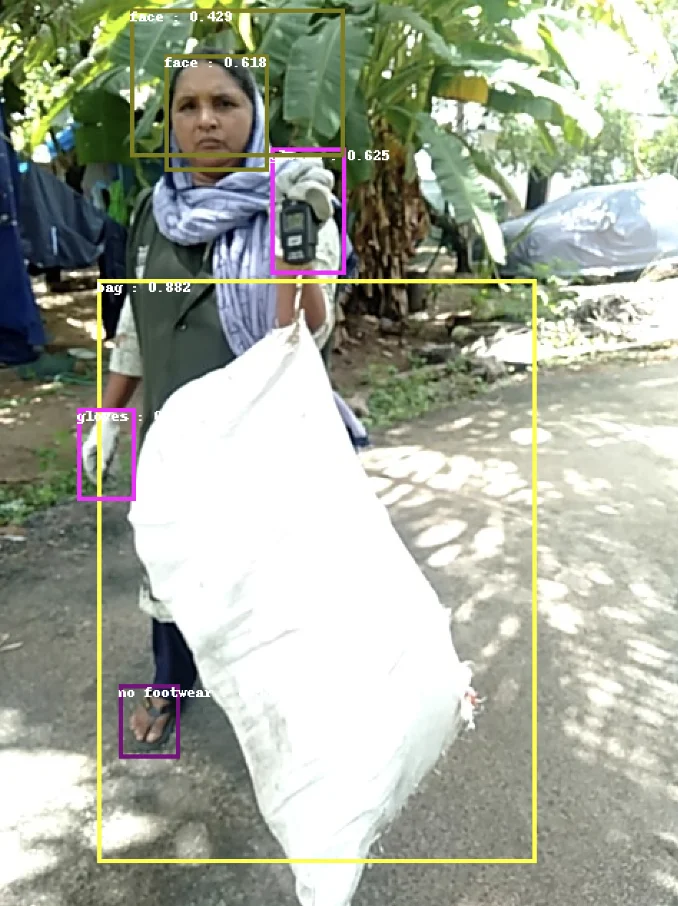
Most track-and-trace systems record what workers type in. Eddy audits the physical reality — from the weighing scale on at point of collection, to the co-processing certificate at the end of the chain. This is how it works:
The recovery journey starts in the field. In most operations, plastic is collected from household routes, business collection, or community drop-off points. Regardless of method, every collection event is captured the same way.
At the facility, waste is sorted into recyclables and non-recyclables. Each output — whether baled plastic or residual waste — is individually registered in the app again.
Why do we need to register the waste again? Eddy monitors mass balance at every stage. We know exactly what entered the sorting process and what came out. Over time, this builds a baseline of normal behaviour — so anomalies in material ratios trigger an alert before they become a fraudulent claim.
Because Eddy knows the source location of the waste, it can also learn what typical material splits look like for each collection zone. Suspicious registrations get flagged for manual review before they ever touch the ledger.
The truck is loaded, weighed on departure, and the net weight is registered — along with GPS and destination. On arrival at the co-processing or recycling facility, the truck is weighed again. Eddy cross-checks the two weights.
Any material added or removed between sorting centre and destination is immediately visible. The chain of custody is complete and unbroken — exactly what DPP-ready circular supply chains require.
Before processing begins, engineers sample every incoming truckload for three values. Each is both an operational necessity and a fraud signal.
Wet material can't be processed efficiently, and brands pay for dry-waste weight — not water. Eddy deducts moisture from the final verified weight. If 10 tonnes arrives at 10% moisture, nine tonnes are verified and issued.
Different plastics have measurably different energy values. A major deviation from expected calorific value signals the material composition is wrong — i.e., not the plastic that was supposed to arrive.
High chlorine concentrations flag PVC contamination — harmful to the process and to the environment. Yet another data point that confirms material identity along the chain.
Once sampling is complete, the facility issues a co-processing certificate. At this point, Eddy marks the waste as verified and collected. The data is locked in the registry.
That breadth of data isn't just thorough — it's the reason Eddy's underlying track-and-trace process became the first in the world to be verified by TÜV SÜD. It's also what makes Eddy's records defensible under ISO 14064-3 and ISO 17029 audit requirements.
For brands & HQs
Proof that holds up in court — or in an audit
Live geo-tagged records replace static spreadsheets. AI anomaly detection catches errors before they enter the registry. Your Green Claims Directive compliance isn't a risk — it's built into the data.
For collectors & operators
Data that unlocks premium markets
Eddy upgrades your collection records to meet European Digital Product Passport (DPP) standards. Verified data means faster invoice approvals, higher material prices, and access to regulated off-takers who couldn't work with your old spreadsheets.
The trust gap in the circular economy isn't a sourcing problem. The material exists. The workers are doing the job. The problem is that the data connecting physical collection to verified digital record has, until now, been too weak to trade on.
Eddy closes that gap. 1,206,120 data entries checked automatically by Eddy's AI-auditor and increasing by the minute and verified byTÜV SÜD.
See the data in action - book a 30-minute demo

